Over-reaction to Maths PSLE Gets Flake from Forumers
Read the forum here - classic!
http://forums.asiaone.com/showthread.php?t=23479

next stop


Scholars continue to argue over the Cobbe portrait, but what have the small and big screens taught us about the Bard?
So it's happy birthday, William Shakespeare! (And happy death-day too.) The RSC's annual birthday procession is underway in Stratford and Cobbegate rumbles on, with Stanley Wells admitting he feels "a bit isolated" in his belief that a recently discovered painting is the only lifetime portrait of the Bard. (Plenty more about that here.)
From The Guardian 23 April 2009. Full Article here: http://www.guardian.co.uk/stage/theatreblog/2009/apr/23/shakespeare-film-tv
But back to the exhibition. It is, as Rachel Campbell-Johnston writes, a stunning, wonderful show, full of the most remarkable exhibits. And most marvellous of all are all the documents annotated by Henry himself, either in his inimitable scrawl, or with a pointed finger, his version of an arrow or highlighter.
For example, one cabinet contains a Bible. Here Henry's pointed finger is aimed at the section of Leviticus which says that "no man marry his brother's wife." This, the King felt, made his case when he demanded a divorce: marriage to Katherine of Aragon (who was first married to Henry's older brother, Arthur) was against the Bible. It was against religion and immoral.
But another cabinet reveals more. It displays love letters from Henry to Anne Boleyn. These letters are owned by the Vatican and were probably smuggled there to prove, during Henry's bitter attempts to divorce Katherine, that lust, not religion was the main reason.
Most of us have some knowledge of Henry VIII, even if we know only that he had six wives, or that he was Elizabeth I's father. But he is so much more than that. This exhibition shows the young, chivalrous, well-educated, Renaissance, but conventional prince, and also the reformist, revolutionary King, who, in David Starkey's words, "tore apart the fabric of England." After all, it was he who broke from Rome, setting himself up as the Supreme head of a new, English, Church.
But Dr Starkey has more than that to say about this fiery Tudor monarch, much more, because he feels that Henry VIII is the central figure in English history. "Henry carries out a revolution," he told School Gate.
Dr Starkey points out that it's Henry, not his daughter, Elizabeth, who began to see England in terms of an empire, and says that it was this 16h century monarch who really developed a sense of English national identity.
"He develops this conception of the realm of England as an empire - self-governing," he says. "Yes, this feeds into Elizabeth's reign, but it's Henry who creates the navy which enables her to turn the notion of empire into reality.
"He also carries out a revolution culturally. This is the beginning of the invention of English as a great language, and English literature as a great literature. The key text is the [translation of the] Bible into English, and that takes place under Henry. It's also the first time that a collected edition of Chaucer was published - and he was to be seen as the English Homer or Virgil."
Dr Starkey feels that it was under Henry's rule that England also developed its euro-sceptic tone. "No other country has the debate that we still have, about our position in Europe," he says. "England sees the continent as Henry did, as something exotic and exciting, but also strange and incomprehensible. He was the original Euro-sceptic."
And all this even though of course, none of it was planned. "It all happened by the accident of him falling out of love with his first wife and in love with another woman," agrees Dr Starkey.
Andrea Clarke, the curator of the British Library, has spent two years putting the new exhibitition together. She agrees with Dr Starkey that Henry is "our most important monarch."
"Just look at all of the changes that take place under his reign," she says. "It's the beginning of the England we know today. There's that sense of national identity following the break from Rome, and a true revolutionary period in British history."
So now you know. Henry was not just the huge, scary, gluttonous King we know from popular lore. He was hugely important for England - and for the rest of the UK too. His daughter's heir, after all, was James VI of Scotland.
(The picture above is a detail from King Henry VIII's psalter, which is currently on show in the British Library exhibition. It dates from 1540 and links Henry to King David, and perhaps even to Jesus himself. It was used by Henry for his private prayers - you can see him in the illustration reading the Bible).
Henry VIII: man and monarch is on at the British Library until 6th September.
From School Gate - Times Online article.
FOOD FOR THOUGHT:
Which are the significant events and who are the significant people in forging Singapore's national identity. What is the Singaporean Identity? Did it begin in 1819? 1945? 1959? 1963? 1965? Thereafter? What constitutes the Singaporean Identity?
Is the Singaporean Identity a constant? Ought it be a constant? If it is still evolving today, will there be, one day, a divide between the old Singaporeans and the new Singaporeans? What do we value and treasure most in what we term the Singaporean Identity, the Singaporean Psyche? We Are Singapore - that age old National Song - indeed invokes and evokes strong chest-thumping feelings.


Silvio Berlusconi, Italy's flamboyant Prime Minister, found himself on Italian front pages today – but more for his gaffe in offending the Queen at the G20 "family photograph" than his performance at the summit itself.
At the end of the G20 photo call yesterday Mr Berlusconi shouted out to the US President: “Mr Obamaaaa! This is Mister Berlusconi!”. The Queen then turned to the gathered leaders and said: “What is it? Why does he have to shout?”
http://www.timesonline.co.uk/tol/news/world/europe/article6027841.ece

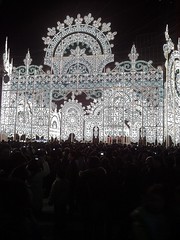
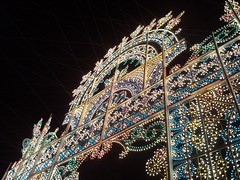
Entrance Arch to Kobe Illuminare 2008
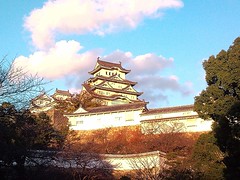
Caught this photo just at sunset, beautiful glow of the castle walls ...
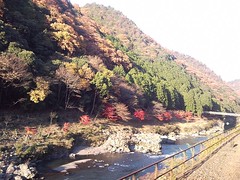
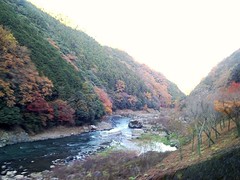
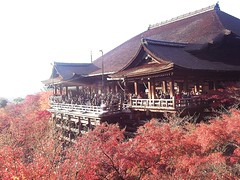
In Kyoto, perched on a mountain, great climb, great view...
From the London Newspapers ...
Saturday November 15 2008
Full Text Link: http://www.guardian.co.uk/books/2008/nov/15/malcolm-gladwell-outliers-extract
The University of Michigan opened its new computer centre in 1971, in a low-slung building on Beal Avenue in Ann Arbor. The university's enormous mainframe computers stood in the middle of a vast, white-tiled room, looking, as one
faculty member remembers, "like one of the last scenes in 2001: A Space
Odyssey". Off to the side were dozens of key-punch machines - what
passed in those days for computer terminals. Over the years, thousands
of students would pass through that white-tiled room - the most famous
of whom was a gawky teenager named Bill Joy.
Joy came to the University of Michigan the year the computer centre opened, at the age of 16. He had been voted "most studious student" by his graduating
class at North Framingham high school, outside Detroit, which, as he
puts it, meant he was a "no-date nerd". He had thought he might end up
as a biologist or a mathematician, but late in his freshman year he
stumbled across the computing centre - and he was hooked.
From then on, the computer centre was his life. He programmed whenever he
could. He got a job with a computer science professor, so he could
program over the summer. In 1975, Joy enrolled in graduate school at
the University of California, Berkeley. There, he buried himself even
deeper in the world of computer software. During the oral exams for his
PhD, he made up a particularly complicated algorithm on the fly that -
as one of his many admirers has written - "so stunned his examiners
[that] one of them later compared the experience to 'Jesus confounding
his elders' ".
Working in collaboration with a small group of programmers, Joy took on the task of rewriting Unix, a software system developed by AT&T for mainframe computers. Joy's version was so good that it became - and remains - the operating system on which millions of computers around the world run. "If you put your Mac in
that funny mode where you can see the code," Joy says, "I see things
that I remember typing in 25 years ago." And when you go online, do you
know who wrote the software that allows you to access the internet?
Bill Joy.
After Berkeley, Joy co-founded the Silicon Valley firm Sun Microsystems. There, he rewrote another computer language, Java, and his legend grew still further. Among Silicon Valley insiders, Joy is spoken of with as much awe as Bill Gates. He is sometimes called the Edison of the internet.
The story of Joy's genius has been told many times, and the lesson is always the same. Here was a world that was the purest of meritocracies. Computer programming didn't operate as an old-boy network, where you got ahead because of money or connections. It was a wide-open field, in which all participants were
judged solely by their talent and accomplishments. It was a world where
the best men won, and Joy was clearly one of those best men.
Sport, too, is supposed to be just such a pure meritocracy. But is it? Take
ice hockey in Canada: look at any team and you will find that a
disproportionate number of players will have been born in the first
three months of the year. This, it turns out, is because the cut-off
date for children eligible for the nine-year-old, 10-year-old,
11-year-old league and so on is January 1. Boys who are oldest and
biggest at the beginning of the hockey season are inevitably the best.
And so they get the most coaching and practice, and they get chosen for
the all-star team, and so their advantage increases - on into the
professional game. A similar pattern applies to other sports. What we
think of as talent is actually a complicated combination of ability,
opportunity and utterly arbitrary advantage.
Does something similar apply to outliers in other fields, such as Bill Joy? Do they
benefit from special opportunities, and do those opportunities follow
any kind of pattern? The evidence suggests they do.
In the early 90s, the psychologist K Anders Ericsson and two colleagues set up shop
at Berlin's elite Academy of Music. With the help of the academy's
professors, they divided the school's violinists into three groups. The
first group were the stars, the students with the potential to become
world-class soloists. The second were those judged to be merely "good".
The third were students who were unlikely ever to play professionally,
and intended to be music teachers in the school system. All the
violinists were then asked the same question. Over the course of your
career, ever since you first picked up the violin, how many hours have
you practised?
Everyone, from all three groups, started playing at roughly the same time - around the age of five. In those first few years, everyone practised roughly the same amount - about two or three hours a week. But around the age of eight real differences started to emerge. The students who would end up as the best in their class began to practise more than everyone else: six hours a week by age nine,
eight by age 12, 16 a week by age 14, and up and up, until by the age
of 20 they were practising well over 30 hours a week. By the age of 20,
the elite performers had all totalled 10,000 hours of practice over the
course of their lives. The merely good students had totalled, by
contrast, 8,000 hours, and the future music teachers just over 4,000
hours.
The curious thing about Ericsson's study is that he and his colleagues couldn't find any "naturals" - musicians who could float effortlessly to the top while practising a fraction of the time that their peers did. Nor could they find "grinds", people who worked harder than everyone else and yet just didn't have what it takes to break into the top ranks. Their research suggested that once you have enough
ability to get into a top music school, the thing that distinguishes
one performer from another is how hard he or she works. That's it.
What's more, the people at the very top don't just work much harder
than everyone else. They work much, much harder.
This idea - that excellence at a complex task requires a critical, minimum level of
practice - surfaces again and again in studies of expertise. In fact,
researchers have settled on what they believe is a magic number for
true expertise: 10,000 hours.
"In study after study, of composers, basketball players, fiction writers, ice-skaters, concert pianists, chess players, master criminals," writes the neurologist
Daniel Levitin, "this number comes up again and again. Ten thousand
hours is equivalent to roughly three hours a day, or 20 hours a week,
of practice over 10 years... No one has yet found a case in which true
world-class expertise was accomplished in less time. It seems that it
takes the brain this long to assimilate all that it needs to know to
achieve true mastery."
This is true even of people we think of as prodigies. Mozart, for example, famously started writing music at six. But, the psychologist Michael Howe writes in his book Genius Explained, by the standards of mature composers Mozart's early works are not outstanding. The earliest pieces were all probably written down by his
father, and perhaps improved in the process. Many of Wolfgang's
childhood compositions, such as the first seven of his concertos for
piano and orchestra, are largely arrangements of works by other
composers. Of those concertos that contain only music original to
Mozart, the earliest that is now regarded as a masterwork (No9 K271)
was not composed until he was 21: by that time Mozart had already been
composing concertos for 10 years.
To become a chess grandmaster also seems to take about 10 years. (Only the legendary Bobby Fischer got to that elite level in less than that time: it took him nine
years.) And what's 10 years? Well, it's roughly how long it takes to
put in 10,000 hours of hard practice.
Ten thousand hours is, of course, an enormous amount of time. It's all but impossible to reach that number, by the time you're a young adult, all by yourself. You
have to have parents who are encouraging and supportive. You can't be
poor, because if you have to hold down a part-time job on the side to
help make ends meet, there won't be enough time left over in the day.
In fact, most people can really only reach that number if they get into
some kind of special programme - like a hockey all-star squad - or get
some kind of extraordinary opportunity that gives them a chance to put
in that kind of work.
So, back to Bill Joy. It's 1971 and he's 16. He's the maths wiz, the kind of student that schools like MIT, Caltech or the University of Waterloo attract by the hundreds. "When Bill was a little kid, he wanted to know everything about everything
way before he should've even known he wanted to know," his father
William says. "We answered him when we could. And when we couldn't, we
would just give him a book." When he applied to college, Joy got a
perfect score on the maths portion of the scholastic aptitude test. "It
wasn't particularly hard," he says, matter-of-factly. "There was plenty
of time to check it twice." He could have gone in any number of
directions. He could have done a PhD in biology. He could have gone to
medical school. He could easily have had a "typical" college career:
lots of schoolwork, football games, drunken fraternity parties, awkward
encounters with girls, long discussions with roommates about the
meaning of life. But he didn't, because he stumbled across that
nondescript building on Beal Avenue.
In the 70s, when Joy was learning about programming, computers were the size of rooms. A single machine - which might have less power and memory than your microwave - could cost upwards of a million dollars. Computers were hard to get
access to, and renting time on them cost a fortune. This was the era
when computer programs were created using cardboard "punch" cards. A
complex program might include hundreds, if not thousands, of these
cards, in tall stacks. Since computers could handle only one task at a
time, the operator made an appointment for your program and, depending
on how many other people were ahead of you in line, you might not get
your cards back for several hours. And if you made even a single error
in your program, then you had to take the cards back, track down the
error and begin the whole process again. Under those circumstances, it
was exceedingly difficult for anyone to become a programming expert.
Certainly becoming an expert by your early 20s was all but impossible.
"Programming with cards," one computer scientist from the era
remembers, "did not teach you programming. It taught you patience and
proofreading."
That's where the University of Michigan came in. It was one of the first universities in the world to abandon computer cards for the brand-new system called "time-sharing". Computer scientists realised you could train a computer to handle hundreds of tasks at the same time. No more punch cards. You could build dozens of
terminals, link them all to the mainframe by a telephone line, and have
everyone programming - online - all at once.
This was the opportunity that greeted Bill Joy when he arrived on the Ann Arbor
campus in the autumn of 1971. "Do you know what the difference is
between the computing cards and time-sharing?" Joy says. "It's the
difference between playing chess by mail and speed chess." Programming
wasn't an exercise in frustration any more. It was fun.
According to Joy, he spent a phenomenal amount of time at the computer centre.
"It was open 24 hours. I would stay there all night, and just walk home
in the morning. In an average week in those years I was spending more
time in the computer centre than on my classes. All of us down there
had this recurring nightmare of forgetting to show up for class at all,
of not even realising we were enrolled."
Just look at the stream of opportunities that came Joy's way. Because he happened to go to a far-sighted school, he was able to practise on a time-sharing
system, instead of punch cards; because the university was willing to
spend the money to keep the computer centre open 24 hours, he could
stay up all night; and because he was able to put in so many hours, by
the time he was presented with the opportunity to rewrite Unix, he was
up to the task. Bill Joy was brilliant. He wanted to learn - that was a
big part of it - but before he could become an expert, someone had to
give him the opportunity to learn how to be expert.
"At Michigan, I was probably programming eight or 10 hours a day," he says. "By the
time I was at Berkeley, I was doing it day and night... " He pauses for
a moment, to do the maths in his head which, for him, doesn't take
long. "It's five years," he says, finally. "So, so, maybe... 10,000
hours? That's about right."
Is this a general rule of success? If you scratch below the surface of every great achiever, do you always find the equivalent of the Michigan Computer Centre or the hockey all-star team - some sort of special opportunity for practice? Let's
test the idea with two examples: the Beatles, one of the most famous
rock bands ever, and Bill Gates, one of the world's richest men.
The Beatles - John Lennon, Paul McCartney, George Harrison and Ringo Starr
- came to the US in February 1964, starting the so-called "British
Invasion" of the American music scene. The interesting thing is how
long they had already been playing together. Lennon and McCartney began
in 1957. (Incidentally, the time that elapsed between their founding
and their greatest artistic achievements - arguably Sgt Pepper's Lonely
Hearts Club Band and the White Album - is 10 years.) In 1960, while
they were still a struggling school rock band, they were invited to
play in Hamburg, Germany.
"Hamburg in those days did not have rock'n'roll music clubs. It had strip clubs," says Philip Norman, who wrote the Beatles' biography, Shout! "There was one particular club owner called Bruno, who was originally a fairground showman. He had the
idea of bringing in rock groups to play in various clubs. They had this
formula. It was a huge nonstop show, hour after hour, with a lot of
people lurching in and the other lot lurching out. And the bands would
play all the time to catch the passing traffic. In an American
red-light district, they would call it nonstop striptease.
"Many of the bands that played in Hamburg were from Liverpool," Norman
continues. "It was an accident. Bruno went to London to look for bands.
But he happened to meet a Liverpool entrepreneur in Soho, who was down
in London by pure chance. And he arranged to send some bands over.
That's how the connection was established. And eventually the Beatles
made a connection not just with Bruno, but with other club owners as
well. They kept going back, because they got a lot of alcohol and a lot
of sex."
And what was so special about Hamburg? It wasn't that it paid well. (It didn't.) Or that the acoustics were fantastic. (They weren't.) Or that the audiences were savvy and appreciative. (They were anything but.) It was the sheer amount of time the band was forced to play. Here is John Lennon, in an interview after the Beatles disbanded, talking about the band's performances at a Hamburg strip club called
the Indra: "We got better and got more confidence. We couldn't help it
with all the experience playing all night long. It was handy them being
foreign. We had to try even harder, put our heart and soul into it, to
get ourselves over. In Liverpool, we'd only ever done one-hour
sessions, and we just used to do our best numbers, the same ones, at
every one. In Hamburg we had to play for eight hours, so we really had
to find a new way of playing."
The Beatles ended up travelling to Hamburg five times between 1960 and the end of 1962. On the first trip, they played 106 nights, of five or more hours a night. Their second trip they played 92 times. Their third trip they played 48 times, for a
total of 172 hours on stage. The last two Hamburg stints, in November
and December 1962, involved another 90 hours of performing. All told,
they performed for 270 nights in just over a year and a half. By the
time they had their first burst of success in 1964, they had performed
live an estimated 1,200 times, which is extraordinary. Most bands today
don't perform 1,200 times in their entire careers. The Hamburg crucible
is what set the Beatles apart.
"They were no good on stage when they went there and they were very good when they came back," Norman says. "They learned not only stamina, they had to learn an enormous amount of numbers - cover versions of everything you can think of, not
just rock'n'roll, a bit of jazz, too. They weren't disciplined on stage
at all before that. But when they came back they sounded like no one
else. It was the making of them."
Let's now turn to the history of Bill Gates. His story is almost as well-known as the Beatles'. Brilliant young maths wiz discovers computer programming. Drops out of
Harvard. Starts a little computer company called Microsoft with his
friends. Through sheer brilliance, ambition and guts builds it into the
giant of the software world.
Now let's dig a bit deeper. Gates' father was a wealthy lawyer in Seattle, and his mother was the daughter of a well-to-do banker. As a child Gates was precocious, and easily bored by his studies. So his parents took him out of public school, and
at the beginning of seventh grade sent him to Lakeside, a private
school that catered to Seattle's elite families. Midway through Gates'
second year, the school started a computer club. "The Mothers' Club at
school did a rummage sale every year, and there was always the question
of what the money would go to," Gates remembers. "That year, they put
$3,000 into buying a computer terminal down in this funny little room
that we subsequently took control of. It was kind of an amazing thing."
Even more remarkable was the kind of computer Lakeside bought:
it was an ASR-33 Teletype, a time-sharing terminal with a direct link
to a mainframe computer in downtown Seattle. "The whole idea of
time-sharing only got invented in 1965," Gates says. "Someone was
pretty forward looking."
From that moment on, Gates lived in the computer room. He and a number of others began to teach themselves how to use this strange new device. The parents raised more money to buy time on the mainframe computer. The students spent it. As luck
would have it, Monique Rona, one of the founders of C-Cubed - a company
that leased computer time - had a son at Lakeside, a class ahead of
Gates. Would the Lakeside computer club, Rona wondered, like to test
out the company's software programs on the weekends in exchange for
free programming time? Absolutely!
Before long, Gates and his friends latched on to another outfit called ISI, which agreed to let them have free computer time in exchange for working on a piece of
software that could be used to automate company payrolls. In one
seven-month period in 1971, Gates and his cohorts ran up 1,575 hours of
computer time on the ISI mainframe, which averages out at eight hours a
day, seven days a week.
"It was my obsession," Gates says of his early high school years. "I skipped athletics. I went up there at night. We were programming on weekends. It would be a rare week that we wouldn't get 20 or 30 hours in. There was a period where Paul Allen and I got in trouble for stealing a bunch of passwords and crashing the
system. We got kicked out. I didn't get to use the computer the whole
summer. This is when I was 15 and 16. Then I found out Paul had found a
computer that was free at the University of Washington. They had these
machines in the medical centre and the physics department. They were on
a 24-hour schedule, but with this big slack period so between three and
six in the morning they never scheduled anything." Gates laughed.
"That's why I'm always so generous to the University of Washington,
because they let me steal so much computer time. I'd leave at night,
after my bedtime. I could walk up to the university from my house. Or
I'd take the bus." Years later, Gates' mother said, "We always wondered
why it was so hard for him to get up in the morning."
Through one of the founders of ISI, Gates landed a secondment programming a
computer system at the Bonneville Power station in southern Washington
State. There, he spent the spring of his senior year writing code.
Those five years, from eighth grade to the end of high school, were Bill
Gates' Hamburg, and by any measure he was presented with an even more
extraordinary series of opportunities than Bill Joy. And virtually
every one of those opportunities gave Gates extra time to practise. By
the time he dropped out of Harvard, he'd been programming nonstop for
seven consecutive years. He was way past 10,000 hours. How many
teenagers had the kind of experience Gates had? "If there were 50 in
the world, I'd be stunned," he says.
If you put together the stories of hockey players and the Beatles and Bill Joy and Bill Gates, I think we get a more complete picture of the path to success. Joy,
Gates and the Beatles are all undeniably talented. Lennon and McCartney
had a musical gift, of the sort that comes along once in a generation,
and Joy, let us not forget, had a mind so quick that he could make up a
complicated algorithm on the fly that left his professors in awe. A
good part of that "talent", however, was something other than an innate
aptitude for music or maths. It was desire. The Beatles were willing to
play for eight hours straight, seven days a week. Joy was willing to
stay up all night programming. In either case, most of us would have
gone home to bed. In other words, a key part of what it means to be
talented is being able to practise for hours and hours - to the point
where it is really hard to know where "natural ability" stops and the
simple willingness to work hard begins.
What is so striking about these success stories is that the outliers were the beneficiaries of some kind of unusual opportunity. Lucky breaks don't seem like the
exception with software billionaires, rock bands and star athletes;
they seem like the rule.
Recently Forbes Magazine compiled a list of the 75 richest people in history. It includes queens and kings and pharaohs from centuries past, as well as contemporary billionaires such as Warren Buffet and Carlos Slim. However, an astonishing 14 on the list are Americans born within nine years of each other in the mid-19th century. In other words, almost 20% of the names come from a single
generation - born between 1831 and 1840 in a single country. The list
includes industrialists and financiers who are still household names
today: John Rockefeller, born in 1839 (the richest of the lot); Andrew
Carnegie, 1835; Jay Gould, 1836; and JP Morgan, 1837.
What's going on here is obvious, if you think about it. In the 1860s and
1870s, the American economy went through perhaps the greatest
transformation in its history. This was when the railways were built,
and when Wall Street emerged. It was when industrial manufacturing
started in earnest. It was when all the rules by which the traditional
economy functioned were broken and remade. What that list says is that
it was absolutely critical, if you were going to take advantage of
those opportunities, to be in your 20s when that transformation was
happening.
If you were born in the late 1840s, you missed it - you were too young to take advantage of that moment. If you were born in the 1820s, you were too old - your mindset was shaped by the old, pre-civil war ways. But there is a particular, narrow nine-year window that was just perfect. All of the 14 men and women on that list had
vision and talent. But they also were given an extraordinary
opportunity, in the same way that hockey players born in January,
February and March were given an extraordinary opportunity.
Let's do the same kind of analysis for software tycoons such as Bill Joy and Bill Gates.
Veterans of Silicon Valley will tell you that the most important date in the
history of the personal computer revolution was January 1975. That was
when the magazine Popular Electronics ran a cover story on a machine
called the Altair 8800. The Altair cost $397. It was a do-it-yourself
contraption that you could assemble at home. The headline on the story
read: Project Breakthrough! World's First Minicomputer Kit To Rival
Commercial Models. To readers of Popular Electronics, then the bible of
the fledgling software and computer world, that headline was a
revelation. Computers up to that point were the massive, expensive
mainframes of the sort sitting in the white-tiled expanse of the
Michigan computing centre. For years, every hacker and electronics wiz
had dreamed of the day when a computer would come along that was small
and inexpensive enough for an ordinary person to use and own. That day
had finally arrived.
If January 1975 was the dawn of the personal computer age, then who would be in the best position to take advantage of it? If you're a few years out of college in 1975, and if you have had any experience with programming at all, you would have
already been hired by IBM or one of the other traditional, old-line
computer firms of that era. You belonged to the old paradigm. You have
just bought a house. You're married. A baby is on the way. You're in no
position to give up a good job and pension for some pie-in-the-sky $397
computer kit. So let's also rule out all those born before, say, 1952.
At the same time, though, you don't want to be too young. You can't seize
the moment if you're still in high school. So let's also rule out
anyone born after, say, 1958. The perfect age to be in 1975, in other
words, is young enough to see the coming revolution but not so old as
to have missed it. You want to be 20 or 21, born in 1954 or 1955.
Let's start with Gates, the richest and most famous of all Silicon Valley
tycoons. When was he born? Bill Gates: October 28 1955. The perfect
birthdate. Gates is the hockey player born on January 1.
Gates's best friend at Lakeside was Paul Allen. He also hung out in the
computer room with Gates, and shared those long evenings at ISI and
C-Cubed. Allen went on to found Microsoft with Gates. Paul Allen:
January 21 1953.
The third richest man at Microsoft is the one who has been running the company on a day-to-day basis since 2000 - one of the most respected executives in the software world, Steve Ballmer. Steve Ballmer: March 24 1956.
And let's not forget a man every bit as famous as Gates, Steve Jobs, the co-founder of Apple Computer. He wasn't from a rich family, like Gates, and he didn't go to Michigan, like Joy. But it doesn't take much investigation of his upbringing to
realise that he had his Hamburg, too. He grew up in Mountain View
California, just south of San Francisco, which is the absolute
epicentre of Silicon Valley. His neighbourhood was filled with
engineers from Hewlett-Packard, then, as now, one of the most important
electronics firms in the world. As a teenager he prowled the flea
markets of Mountain View, where electronics hobbyists and tinkerers
sold spare parts. Jobs came of age breathing the air of the very
business he would later dominate. He picked the brains of
Hewlett-Packard engineers and once even called Bill Hewlett, one of the
company's founders, to request parts. Jobs not only received the parts
he wanted, he managed to wangle a summer job. He worked on an assembly
line to build computers and was so fascinated that he tried to design
his own... Steve Jobs was born on February 24 1955.
Another of the pioneers of the software revolution was Eric Schmidt. He ran
Novell, one of Silicon Valley's most important software firms, and in
2001 became the chief executive officer of Google. He was born on April
27 1955.
I don't mean to suggest, of course, that every software tycoon in Silicon Valley was born in 1955. But there are very clearly patterns here, and what's striking is how little we seem to want to talk about them. We pretend that success is a matter of individual merit. That is not the whole story. These are stories about people who
were given a special opportunity to work really hard and seized it, and
who happened to come of age at a time when that extraordinary effort
was rewarded by the rest of society. Their success was not of their own
making. It was a product of the world in which they grew up. Their
success, in other words, wasn't due to some mysterious process known
only to themselves. It had a logic, and if we can understand that
logic, think of all the tantalising possibilities that opens up.
By the way, let's not forget Bill Joy. Had he been just a little bit older
and had to face the drudgery of programming with computer cards, he
says he would have studied science. Bill Joy the computer legend would
have been Bill Joy the biologist. In fact, he was born on November 8
1954. And his three fellow founders of Sun Microsystems - one of the
oldest and most important of Silicon Valley's software companies? Scott
McNealy: born November 13 1954. Vinod Khosla: born January 28 1955.
Andy Bechtolsheim: born June 1955. ·
© Malcolm Gladwell 2008.
• This is an edited extract from Outliers: The Story Of Success, by
Malcolm Gladwell, to be published on November 27 by Allen Lane at
£16.99. Malcolm Gladwell: Live In London is on November 24 at 5.45pm
and 8.30pm at the Lyceum Theatre, London. Tickets from £13.50 to
£26.50. To book, call 0844 412 1742 or go to malcolmgladwell-live.com. There will be an interview with Malcolm Gladwell in tomorrow's Observer.

By Nicola Woolcock Education Correspondent
How would you respond if your child refused to eat her vegetables with the words: “Mummy, I feel very uncomfortable having to eat all these peas”. ?
SEAL has the enthusiastic support of ministers, who are currently exploring
whether pupils should be assessed at school on their personal development as well as their academic achievements.
As a mark in how far this approach to learning has gone already, schools in
Birmingham were told earlier this year that happiness in the classroom
should be treated with the same importance as academic achievement.
But Professor Hayes does not approve. Indeed, he believes that teaching
emotional lessons in school, gets in the way of learning and represents
a form of child abuse that manipulates pupils into being victims.
He told a recent gathering of educationalists in London organised by the
Westminster Education Forum that schools are in danger of becoming
“social work centres staffed by psychiatrists brainwashing pupils”.
Millions of pounds, he says, are being spent on protecting children from
bullying, teaching them to respect others and coaching them in “proper
emotions”, such as empathy not anger.
“One mother told me that her son had learnt the ‘dealing with potentially
abusive situation’ scripts so well that at dinner he said, ‘Mummy, I
feel very uncomfortable having to eat all these peas’.”
Professor Hayes, who is co-author of a book called The Dangerous Rise of Therapeutic Education, believes that such tactics exacerbate problems by making children oversensitive.
http://warner.blogs.nytimes.com/2008/11/06/title/And it was. An era of unbridled deregulation, wealth-enhancing perks for the already well-off, and miserly indifference to the poor and middle class; of the recasting of greed as goodness, the equation of bellicose provincialism with patriotism, the reframing of bigotry as small-town decency.
In short, it was the start of our current era. The Reagan Revolution was the formative political experience of my generation’s lifetime,like the Great Depression, the Second World War or Vietnam for those before us. And in its intellectual and moral paucity, in its eventual hegemony, these years shut down, for some of us, the ability to fully imagine another way.I will admit that back in January, when Barack Obama, in his post-Iowa victory speech, spoke about the “cynics,” the “they” who said “this country was too divided, too disillusioned to ever come together around a common purpose,” he was talking about me.
I will admit that the call of “change” did not speak to me as an achievable goal.Until it actually came.
On Wednesday, there was a run on newspapers, as voters rushed to grab a tangible piece of the history they’d made. My husband Max and I,unable to find extra copies, brought our own worn papers home to 8- and 11-year-old Emilie and Julia.Sept. 11, the seismic event that we’d feared would forever form their political consciousness, shaping their world and constricting the boundaries of the possible, had actually been eclipsed, light blotting out darkness, the best of America at long last driving away the demons of fear. We wanted them to see that it was the end of an era.
“Look,” we said, pointing to the headline “Racial Barrier Falls.” “This is huge.”We labored to make them understand that their world – art that day,
and orchestra, and Baked Potato Bar at lunch – had irrevocably changed.
They were happy because we were happy. They rose to the occasion in that bemused way children do when adults tell them what they should feel. They were glad to be rid of George W. Bush and to be saved – for now – from the specter of Sarah Palin. (“It is not O.K. to say she’s an ‘idiot,’” I had snapped when they came home from school stoked by the mob. “Prove your case. Show, don’t tell.”)
They’d had, like many D.C. children, more than their share of politics. After first following the country into battle against the all-purpose boogeyman Saddam Hussein, they’d become antiwar. They had opinions on tax policy and spoke angrily about the “wealth gap.” In the past election year, they’d been fired up about the woman thing, in all its pretty girl versus smart girl iterations; in fact, they and their friends had remained hard-core Hillaryites long after their moms had moved on.But the race thing? The groundbreaking enormity of the election of our country’s first African-American president?
“You’re being racist,” Emilie had said when I made a comment about how particularly earth-moving this election was for black voters. “Why should it matter if people are black or white?”Theirs has often looked to me like a world drained of meaning. Girl power put to the service of selling Hannah Montana. Feel-good inclusiveness that occulted the very real conflicts, crimes and hatreds of history.
It isn’t easy to let go of the past to embrace something new, to risk heartbreak on the chance of the world’s actually having changed.Or at least, it hasn’t been easy for me. But it comes naturally to some. Like the hundreds of George Washington University students who gathered in front of the White House on Tuesday night, cheering and screaming and shouting their goodbyes to the political era of their youth.
“Bliss it was to be alive, but to be young was very heaven,” Max emailed me, paraphrasing William Wordsworth on the French Revolution, at 11:30 p.m. on election night, after leaving his desk to walk among the revelers downtown. I, home with the kids, was in bed, sleeping the drugged sleep of an alcohol-abstaining migraineuse after drinking half a glass of celebratory champagne.
Colin Powell did not dance for joy over Obama’s victory; he wept.“Look what we did. Look what we did,” he said, puffy-faced, red-eyed, fighting back more tears on CNN. “He’s won. It’s over.”
David Dinkins was similarly solemn. “Things do change. There is a God. They do get better,” said the mayor who presided over New York City at a time of toxic racial tensions.Obama, too, resisted giddy gladness on Tuesday night. But he did proclaim an end to the world as we’ve known it for far too long.
“To those who would tear the world down: we will defeat you,” he promised. “This is our moment. This is our time.”The glory of Barack Obama is that there are so many different kinds of us who can claim a piece of that “our.” African-Americans, Democrats, post-boomers, progressives, people who rose from essentially nowhere and through hard work and determination succeeded beyond their parents’ wildest dreams are the most obvious.
But there are also people who respect intelligence and good grammar. People who see their spouse as their “best friend,” as Barack called Michelle on Tuesday night. People whose children have the same knowing look as Sasha and Malia, who are probably more excited about their puppy than about their father’s presidency.Two images will forever stay in my mind to mark this epoch-breaking election day. One is that of Jesse Jackson’s face, drenched in tears, in Chicago’s Grant Park on Tuesday evening.
And the other is a photo that ran in The Times on Wednesday. In it, a black mother and daughter sit on the floor of a church in Harlem. The mother, Latrice Barnes, having heard of Obama’s victory, is doubled up in tears; her daughter, Jasmine, is reaching a tentative hand up to soothe her. To me, she looks like the future, reaching out to heal the past.
It is, I suppose, in part a matter of temperament, whether one shouts or weeps at happy transformative moments. But I also think it’s a matter of what has come before. The young people joyfully frolicking in front of the Bush White House never knew the universe whose passing was marked by Obama’s victory and Jackson’s tears.
This moment of triumph marks the end of such a long period of pain, of indignity and injustice for African-Americans. And for so many others of us, of the trampling and debasing of our most basic ideals, beliefs that we cherished every bit as deeply and passionately as those of the “values voters” around whose sensibilities we’ve had to tiptoe for the past 28 years.The election brought the return of a country we’d lost for so long that it was almost forgotten under the accumulated scar tissue of accommodation and acceptance.
For me, this will be the enduring memory of election night 2008: One generation released its grief. The next looked up confusedly, eager to please and yet unable to comprehend just what the tears were about.
By Judith Warner, in The New York Times Blogs
http://warner.blogs.nytimes.com/2008/11/06/title/
No Euphemism ... Real Talk
I am utterly disgusted. It's not bout bashing China or whatever. I am proud to be an ethnic Chinese, BUT this entire farce just befuddles me! It's like... what stoneage caveman mentality that senior politburo has, and what racial argument reasoning is that 'national interest'? Why can't we accept imperfections in humanity? Why can't we see the beauty in the crooked teeth, the innocence and purity in the undoctored and unpainted genuine face? If I were Hu Jintao, I will DEMOTE that senior politburo who made this most unfair and unsportsmanlike suggestion.
Sir Ken Robinson, Creativity Expert and Consultant to the British Government on educational reforms, speaks about how we have to rethink and reshape our education systems for the 21st Century.
The Olympic Motto:
Ok.. I m out of hibernation...
Pavarotti is dead.
Evocative bit of poetry from classic film 'Calendar Girls'.
Was looking at the vids on utube on Singapore Day 2007.
Broadway, West End, Sydney, Shanghai, L.A. ...
Time to do some publicity....
Our former student passed away.
Just back from China - a whirlwind 12 days' immersion trip, covering lessons in the Chinese classrooms of Changchun's Dong Bei Shi Fan Da Xue Fu Shu Shi Yan Zhong Xue, meetings with their different teachers and heads, with lots of visits to places of interest and museums packed in too. Then, off on a train to Chang Bai San and the Korean Tribe Autonomous Region at the border between China and Northern Korea, and then coming down to Shanghai for a transit night before returning to Singapore. Great trip, great experience, great reflections, great insights, great students and company, great adventure!
Caught 300. Great film, not because it's the best adapted screenplay, or that it's the best film of the year, for these it certainly is not. But because of its classic historical tale itself. Well, some film connoisseurs would like to believe that it could be told with more stylistic poetry and pacing. Yet, this is about a real story of a brutal battle in a brutal age by a brutal people against another brutal people. In that context, the simplicity and starkness of its brutality and directness of its killing stands as a clear image of that age.
The tale of the 300 Spartans in their last stand against the full might of the Persian Empire at the Hot Gates of Greece is a classic one, one in which a few prevailed over many, holding out for an impossible stretch of time, till the bitter end. The Battle of Thermopylae is still studied in all military academies the world over.
It was a battle doomed to failure, but the heroic Spartans still persisted, because they saw the larger victory it would accord Greece, for it forestalled the progress of the Persian army, and allowed the Athenians, Spartans and other Greek nation-states to prepare themselves for the final onslaught. It was not the battle to end all battles, but it was the critical battle that allowed for final victory thereafter.
And the Spartans in their full heroic glory stood the test of time.
Classic quotes from the annals on the Battle:
So much the better, we shall fight in the shade
Prepare for Glory
Tell of Victory
It's heroic and tragic pathos at its very best.
The Last Stand.
300.
-------------------------
Military Lessons from the Spartans:
... There can be no weak link in the rank and file of the entire formation when one goes into battle. All must be equal in every aspect. All shields must be held at the same height, with no gap possible. All in one and one in all. It's not merely individuals, but a brotherhood. Otherwise, one would fail. The quality of the army is only as good as its weakest link. There can be no weakest link.
... The whole formation must be United As One. All must move with deadly swiftness and precision. The success of the attack will only be as good as how sharp and together one and all executes the thrusts and moves. Attack together, attack fast, be clean and swift, and then move on again.
... Plan well ahead, and plan well. One wrong decision or move can very well cost the entire battle.
... Think not of personal glory alone, but of the ideals and glory of the nation.
-------------------------
Lessons from Britain, Churchill, WWII:
Winston Churchill: We shall fight on the beaches, we shall fight on the seas, we shall fight in the skies ... we shall never surrender! (WWII)
Britain all alone against the entire might of Nazi Germany, and standing firm, the lone fortress in the sea.... Their Finest Hour.
-------------------------
Our Battles 2007: SYF, Prelims and 'O' Levels.
Hmm ... still marking prelims 1 compre....
Renaissance - The Rebirth.
I am now convinced that I am a workaholic. I can declare that with utmost confidence and certainty. I thrive on work, and I wither in rest. The energetic drive one experiences in constant decisions and actions just moves one along. And I feel alive. Period.
My sis just discovered this site. She had gone for a gathering with her primary classmates (imagine that... she's already working now), and in their exchange of information, one of the classmates mentioned encountering this photo once, yet not knowing who it was... and hey, it was actually my sis and her friends who had written those words on the blackboard of her old primary classroom when they went back to visit. So she came back, and started searching for the photo on the website... and even more coincidental were the comments made by the photographer ... read on at the site...Not been blogging much recently. Not very inspired.
FLAG OF OUR FATHERS
LIFE ... no regrets.
------------------------------------------------------------------------------------
Listening to John Petrucci now ... soulful 'Wishful Thinking', sets one in the reflective mood; it's the time of the year again...
If you can still the heart and stay the course,
I m dead tired, hungry ...
13 October. Most significant date.
It has been a hectic 2 weeks. Rushing everywhere everyday. Sec 4 Music Practicals the priority now. Spent most afternoons and saturdays doing the sec 4 music practicals, and the other day was spent at MGS trying out their piano for the pract. Much of the English marking was put on hold, because all energy and mental focus spent on the music practicals. Next week is gona be another mad week ... out for the real 'O' Level music practicals from wednesday to friday, from 8am till 6pm everyday. Yes, it's that tedious, examining and writing comments for every candidate throughout the week.
I caught the final day performance of local musical 'Forbidden City', music by local composer Dick Lee, story and lyrics with West End award-winning Stephen Clark and idea collaboration with Steven Dexter, Presented by the Singapore Repertory Theatre.
It was a most fascinating presentation on an important epoch and character of pre-modern China History. Told through the reminiscence of the elderly Empress Dowager Cixi, it tells of a woman, an empire, and a people fighting for what they believe to be for the good of their nation. It tells of a nation fighting against foreign imperialists, in a doomed effort, to retain their way of life which had always been for 5000 years. In essence, that historical period - the Opium Wars, the Hundred Days Reformation, the Boxer Rebellion, the Allied Invasion - all shaped and crafted Chinese political psyche and mentality for the 100 years since, and its scars and impact still echo in the halls of Chinese politics and diplomacy today.
Charged and moving, moments abound when the air seemed to hang in suspense, as none dared breath but hung onto every word and note of the characters. I suppose it being the final day had its effects too. It was a full house, and after a month-long run.
And the music and lyrics. The chic fusion of traditional eastern instruments and modern western ones creates a lush orchestration. The soaring yearning of My Only Chance, the hope and optimism of A Hundred Days Reformation, the turmoil and angst of Blood in the Streets, and the despair thereafter, and the same lyrics and melodic motifs presented by opposing characters in simultaneous contrasting contexts - the ironic parallels. The many turns, lifts and lines ofthe tunes and the poignant words just continued floating and etching their imprints in my mind even two days after. It will probably be a most successful world tour, esp in China. I look forward to its next run, and I will definitely be in attendance.


Right, here is the first set of one-word questions:
百万人反贪污倒扁 ... ...阿扁下台!
围城之夜 台湾感动 
当千百万人民自发的站起来时 那是发自内心的怒喊
当建中北一等中学生站出来时 那是发自年轻的真挚
当豪雨与心身汗水泪滴交集时 那是发自无声的忍耐
那一夜的真理与公义
那一夜的勇敢与执著
我听到了 我感动了
你听到了吗 你也感动了吗
真的,当到了忍无可忍的时候,当到了大是大非的时候, 就是到了站起来的时候了。 当人民站起时,当青年站起时,那就是最真实伟大无阻的力量了!
Note: 看到台北所有名校,如建国中学,北一女中, 師大附中,松山高中,台中一中 的学生在昨晚的倒扁围城中走上了前线,我又想起了年轻人的希望。 从五四运动, 到抗日, 到钓鱼台,到天安门学潮, 都是年轻人学生出于对真理公正的述求与憧憬而付出的行动。
曾经,我们都年轻过。
青年学生永远都是走在时代与革命的前端的。以前是,现在是,以后也是。
Above are my thoughts upon watching the Protest March against P. Bian in Taipei last night. Decided to write that in Mandarin, because I feel more expressing in Mandarin for this issue.
I have been following the Taiwan 'Down with the President' campaign, and it's most fascinating, or rather, most thought-provoking. I have never had much liking for that Bian, and I just cannot stand his ineffectiveness, his lack of judgement, his lack of consideration for others, his lack of compassion, his lack of conscience and justice, and his lack of class. I guess his own Taiwanese people have finally decided that enough is enough, hence this current final outpour of public anger and action. Yesterday's Protest Encircling March, joined in by some 800000 people stretching some 5.5 km (from the front line to last line of protestors), self-initiated and not rallied by the political parties, was a most inspiring and moving sight. Note the massive crowd in the photo. The entire crowd of some 800000 protesters took about 6 hours to encircle and march around the Presidential Palace area. That's real People's Power.
------------------------------------------------------------------------------------------------
Next. Below are 2 articles I culled from sina.com. One article highlights the active participation by the youths and students of Taipei's top schools in this campaign, which is interesting, because when the young intelligensia takes to the streets like that, it is always an indication of the extent of disgruntle and problems that society has, and thus, they finally stand out, and become a catalyst of change.
An article from an online news site.
五千學生軍 穿制服打頭陣
聯合新聞網 (2006/09/16 05:49)
http://news.sina.com.tw/politics/
【記者楊德宜、王宏舜∕台北報導】
圍城遊行的隊伍昨天下午出發後,由超過五千名高中生、大學生打頭陣,大多數學生沒穿雨衣,走在雨中嘶吼「阿扁下台」;一群考完模擬考相約上街遊行的高中生說,「你倒扁了沒有?」已經是校園的招呼語了。
來自建中、北一女、師大附中、松山高中、台中一中等上百所學校學生,昨天下午成群湧入凱道,大多數學生穿著制服、背著書包,頭上或手臂綁紅布條。隊伍中的學生不停開心尖叫,大吼「我終於能來倒扁!」
成功高中曹同學說,許多同學的白色制服下穿的就是紅T恤,顏色藏都藏不住。雖然校方告誡不要穿制服上街,以免外界對學校產生誤解,不過學生們說,身上只穿著一件制服上衣,「不穿制服遊行,難道要脫掉?」
南港高中三年級尤欣和兩名同學一起走在人群中。她說,「阿扁害教育經費都沒有了,我們連冷氣、水電費都要省」,加上看到校長周三在報紙民意論壇發表倒扁言論,「超感動的,所以我們來,表示力挺校長!」
大同高中的劉姓女同學和班上十個同學「組團」前進凱道。劉女表示,她們特地穿制服來倒扁,就是要讓大家看到年輕人也來了。她說,班上也有民進黨支持者,但也希望阿扁下台,別拖垮民進黨。 其他學生也搶著說,教育部長杜正勝希望學生不要穿制服上街,但是每個人都有自己的思想,「他管不到」;而且高三生都快有投票權了。
建中三年級鄭可灝與隔壁班同學來,三人頭綁紅巾,吼得賣力。他說,因為昨天才結束連續兩天的北區模擬考,考完立刻趕來凱道,他痛恨阿扁貪腐,「現在能吼出來,很爽!」
育成高中二年級江孟軒一開始就走在隊伍最前頭,他說,第一次參加群眾運動,「很有榮譽感」,全校至少一百名學生參加,「看阿扁不爽,我一定要看到他下台」。
南強工商一年級李文豪、何元凱、潘奕維共同扛起個子小的林坦蔚,四人以騎馬打仗姿態往前衝。林坦蔚說,他的父母都挺綠,他沒讓父母知道他來圍城,回家一定會被罵,「管他的,我一定要阿扁下台」。
An article from an online site.
員警 悄悄比了倒扁手勢
聯合新聞網 (2006/09/16 05:49)
http://news.sina.com.tw/politics/
記者 林新輝
你從未看過這樣的景象,五點五公里長的紅色人龍前進,只發出一種聲音,「阿扁下台」。
你不會見過這樣的畫面,遊行隊伍經過接近總統官邸的重慶南路口,全副武裝的員警,在暮色中,悄悄的向高喊阿扁下台的隊伍比出倒扁手勢,跟背後冰冷的拒馬、蛇籠形成強烈對比。
你從未看過這樣的景象,建中、北一女、成功、景美、中山、松山、新店、光仁女中、中正、延平、復興、南港高工、大安高工的高中生,毫不忸怩作態,穿著校服,帶著繡有校名的書包,下課後直奔凱道,手牽手、肩搭肩,十人一排的領頭,站在遊行隊伍前面帶領呼喊「阿扁下台」口號。
你也沒有看過,中華路上三輛急駛的公車,公車上十幾名乘客,遇上遊行隊伍,要求駕駛停車讓他們下車,加入倒扁的遊行隊伍。
寧波西街、衡陽路左右兩旁做生意的老闆,看見遊行隊伍經過,放下店裡的生意,站在騎樓高喊「阿扁下台」。你也不會看到,一位男子站在二樓,將家裡的窗戶拆掉,穿著紅衣,整個人趴在外面喊著「阿扁下台」。位在公園路上的遠東國際銀行大樓的四樓,一群人貼著玻璃帷幕,喊阿扁下台。星巴客的阿媽,拉麵店的小姐,全身通紅,靠著透明窗比出倒扁手勢。
當然你也不會遇見這樣的事,五個男女正在寧波西街的一家海鮮餐廳吃飯划拳,看見紅潮隊伍,酒拳不划,改比畫倒扁手勢。數十位民眾租下凱撒飯店,打開窗戶拉出紅布條,閃著房裡的燈光,喊著阿扁下台。
遊行隊伍經過南海路建國中學,一位建中的學生跳上指揮車,拿著麥克風用RAP的音調喊「建中畢業的十萬校友,十萬校友十萬軍,統統站出來」。
红潮滾滾的群眾,沒有動員,沒有走路工,沒有訓練,只發一種聲音,一個動作。這樣的景象,你鐵定沒有看過。這樣的場面,吳淑珍、陳水扁及主政的綠營,應該看一看。
Right... getting a bit bored and going bonkers, so I am going to do something radical. I am going to post in Singlish (haha). I am gona write some comments about Singapore Dreaming, in Singlish, then maybe the students can do a translation into proper standard English. Give your very best in crafting your expressions (make it as sophisticated and evocative as you can), and print out your translation and pass it to me (with your name and class written clearly on the entry), and I will give a prize for the best translation. Haha...
Came across this quote, by the great American novelist Henry Miller. It is a most uplifting and enlightening observation. Thought it will be good to share with all, especially for those who are troubled and have strayed off.


Right. There has been another post by the famous anon tagger on my tagboard. I had thought of giving him the same cold treatment (i.e. ignoring him), but later, I thought that his tags reveal some ignorance on his part as to Singlish, Standard English (Singaporean) and English English (does it still exist today? researchers beg to differ, in fact.) Also, there are parts of his tag that smack of either malice or lack of good values. So, I have decided that for once, I will do that fellow a service, as well as clear some doubts for all interested others. I had initially tagged the below responses, but I find that a bit too long for a tagboard, so I have collated all of them here:
Came across a review in mrbrown's site of a performance held in The Arts House at the former Parliament House.
Alright .. the Prelims EL will be on Monday.
I have not been blogging for quite a while - in fact, I been very busy with work, what with reports to rush, proposals to write and put into action, EL morning lessons and of course the sec 4 EL oral prep, which is a most draining process. coming up, the music practical sessions...
Came across this poem in a friend's blog. Really struck by it. Thought it would be good to share with all.
Great CHMA last night. Was standing at the back of the hall after settling the judges, and believe me, I was practically rocking while standing the whole night. The beatboxing and the rappers really set the mood for the evening. So it was a most electrically charged CHMA, showcasing the entire spectrum of our CH music talents. Ranges from East to West, from yang qin to guzheng to piano to electone, with both Mandopop and Englishpop, as well as instrumental rock, chinese rock and western rock, with both creative espressions of other sorts - beatboxing and original composition. In other words, CHMA 06 is a whole tour de force of what our CH students are capable of. And thinking back to 2003, when we first started the CH Music Awards, I remember we said we wanted to 'Create Stars of Tomorrow'. CHMA is a platform, and a first step, for many of our students.
Hectic marking this week ... all the prelims 2 compre scripts for the whole level, some 360 scripts in total, to finish asap.
Alright, it's finally over, Homecoming 2006! And it's a good success, with a good crowd of old boys and parents/friends coming back to enjoy themselves. Saw old faces from the class of 2000 all the way to last year 2005, which was like a walk down memory lane for many of us teachers! On my part, even saw the guys from my batch (class of 1989) in the old boys basketball tournament held in the hall this morning! And everyone of us oldies have really grown old and put on weight after all these years.
OLD BOYS of CH, Come Back for the annual Homecoming Day Food & Fun Fair.
Right, so I am back from Tokyo. Touched down Singapore just past midnight on 14 June, and have been getting back into momentum these few days. The trip itself was quite a rambling one. I had gone on a free and easy individual trip, just me and myself. So I started off without a fixed iteniarary. I just had a vague fuzzy idea that I would probably roam around the few main districts of Tokyo, particularly those I had not visited the last time. It would be a walking tour, and I would explore the nooks and corners of these districts. I had also vowed not to purchase unnecessarily, as the Yen is quite exorbitant. Well, I did walk, I did explore the districts, and I did used the subway (numerous Asakusa Line, Ginza Line etc) and train (JR line) extensively. Food was kept to minimal expenditure, adhering to the basic lunch and dinner fare that the typical tokyo worker would take.
Anyway, there was good western buffet or Japanese breakfast to choose from each morning, accompanied with good vantage views of the city skyline from the 24th storey restaurant of Royal Park Shiodome Tower Hotel. I had on the spur of the moment decided to upgrade my room to a larger one, with views of the city as well as the offices of the adjacent Nippon TV Building. They are really workaholics, for the offices and their smoking galleries were lit and buzzing with activities even at 11 pm. Yes, I shamelessly did observe their activities from my room.
Day 1, I walked the district (or chome) of Ginza (my avowed destination for this trip), and then decided to go up to Asakusa, revisit the temple, and then make my way down the Sumida River and say hello to the bridges that I have always wanted to visit. And it was a walk, with some referring to a map I took at the airport, and trying to figure out the kanji (Chinese charaters) and Japnese words. Somehow, I managed to complete the length of Ginza main street, filled with a heavenly selection of stores and cafes.
But it was simply too far to walk all the way up to Asakusa and Sensoji (one of the most ancient temples in Tokyo), so I finally made my way into Ginza East subway station, hoped onto the Asakusa Line, and emerged from Asakusa Station some 20 minutes later. It was a good day to visit, I should say. The first shock was the disappearance of the main Sensoji Gate, now shrouded under modernistic looking white coverage cloth - under conservation works. Then, there were so many school children on outing, and buying and praying there. I think it was the end of spring school term, and this would be their end of term outing - it included high school students as well as middle school students. Then on my way out, there were little kids as well. It was indeed good timing for me.
Anyway, the walk down Sumida River was a long one. I had chosen to walk in the evening, as that would best set off the colours of the lit bridges. I walked for about 2 odd hours, and with the cold spring temperature of some 20 degrees at night with the wind blowing right into my face, it was quite a task - not as enjoyable as I had envisage. And the riverside was nothing spectacular, not even to consider beautiful or nice. It was mainly either dingy muddy parks, or slumps. It was not at all like our vibrant al fresco riverside back home. I only managed to cover 3 bridges before calling it a day. I decided to leave the remaining bridges to my next trip.
I had not counted on my impulse to purchase. And that I did. So I bought, and bought - in Ginza, in Shiodome, in Ueno, in Odaiba. I devoured suits, clothes, pants, books, DVDs, CDs, souvenirs. I burst my budget in the process. So in the end, I lingered for hours in shopping districts, and in their shops with rows and rows of trendy working suits, and browsed the attractive magazines and books. I did eat too, and that was a highlight - trying out the respective little eateries frequented by the office executives, standing or sitting at the counters, and then for supper, choosing from the different bento sets all available at stores and superstores ... at a discount of course, esp late a night. They were mainly simple fare of some 450Yen per meal, and the bento sets were even going at discounted price of 350Yen after 9pm. All in all, I only spent some 200 odd Singapore Dollars on food this round, excluding the hotel breakfasts.In retrospect, I should be satisfied with this break, for I just simply gave way to my impulses and went by my instinct every moment of the day there.

Weddings at Meiji Shrine - I guess it must have been an auspicious day for nuptials. I witnessed no less than some 8 couples going through the traditional wedding procession. It is interesting, the procession - the family members of the bride and groom will be lined up behind them respectively, and then they would proceed from a palace hall on the right of the grounds into the main plaza in front of the Shrine, and then up to another palace hall on the left of the grounds towards the inner recess of the Shrine to pray. After that, the procession will retrace their route back to the original hall, with closing words by the Priest to the bride and groom, followed by numerous bowings from both families. Then, they move on to that their family portrait for the occasion. Each wedding procession takes about 15 minutes, and it is superbly timed to avoid any clashes of schedules between the different couples. Most quintessential too, the processions, almost like period dramas. (NOTE: zoom in and scrutinise the wedding couples - there is something of interest here.) 
One morning (the 4th, I believe), I decided to trek my way to this gigantic temple in the distance which I had seen from my 36th storey room. I had not any inkling what its name was, where it exactly was situation. So I simply set out in the vague direction of that temple. Along the way, I tarried along the little streets and chomes of Tokyo, and decided to create a photo portfolio of the vending machines I encountered along the way. Afterall, Tokyo is known as the land of vending machines. Indeed, one store which I termed the mother of all vending machines site had 7 vending machines of drinks for the consumer to choose from. Amazing.
I finally reached the temple (Zozo-j Temple) after some 2 hours, and discovered that it had once belonged to the Shogun clan which had ruled Edo (former name of Tokyo) for centuries before the Meiji Restoration. That day, the main hall was under preparations for some anniversary memorial for the Tokugawa Clan (Shogun's Clan). Today, the grounds have shrunk, part of it taken over by the Prince Hotel, but the grounds are still extensive, and there are 3 main palace areas. The old burial gounds of the clan lie behind the main palace hall, and are still well kept. Now isn't that simply satisfying, for a vague journey with a vague direction had yielded something concrete, indeed something valuable - an unplanned encounter with a main part of Japanese history. And Tokyo Tower is just some distance away from the temple, most visible here, towering over the main temple hall itself. It provides a most perceptive contrast of new and old, in particular reminding one of how the Shogun's demise and the Meiji Restoration were what made the industrial progress in Japan possible. 
(Nippon Samurai Soccer Stars Banners hanging inside TV Asahi Building Lobby. )
I have been staring at pictures of hotel rooms on internet hotel sites for days in a row. Rather, I have been scrutinising the pictures, and reading travellers' reviews posted everywhere. So, finally I was down to the 2 choices below. And this afternoon, 2 days before I fly, I finally booked the hotel room... haha ... the wonders of technology ... allowing for my last minute habits.


Ok then, here's my response to the question on the tag - what essay should the sec 4 student attempt for EL essay? I will not be able to advise you as to what you should do personally, unless I see your writing, and find out from you what your reading and writing habits are thus far. You must come to me or your EL teacher (if it's not me) for personal consultation as to this. That is the only meaningful way for good advice. However, there are some thoughts you should consider:
Just finished Band Camp on saturday past. It was a short camp, basically a fun bonding camp for the band after the new sec 3 batch takes over the band. It was good, seeing how the sec 3 leaders and cohort develop their styles, and come into their leadership skills. One highlight, I should say, was showing the band this documentary on the Berlin Philharmonic. It is one of the world's greatest orchestra, and it is a musical group that we want to learn from and emulate. Indeed, from the reflections written by the boys after the viewing, I think they have learnt the success factors and lessons well. This augurs well for the future of our band.
Oh well, I finally changed the look of this blog. (Thanks nicol, for the tips on uploading and creating the picture banner etc.) Changed the colours, the main banner, the tone, the feel. Changed the title too; there's a greater sense of the present in this new name.
Our Symphony Band has just completed our leadership renewal process, and the new leaders of 2006/2007 are now in place.
BBC had one of the most public and high profile boo-boo in broadcasting history when it had a 'Live' interview with the a Mr Guy Kewney, an IT expert of the industry, only to realise mid-way through the interview with the French accented guy that it's the wrong guy.
This is a Tang poem which I especially like. It's broad passionate and lyrical lyrics convey a sense of rugged sorrow twinned with an indomitable spirit. Most rousing and stirring poem.
A picture of one of the famous rallies by wp which I found on the web. This one was at Ang Mo Kio, which PM Lee said his son attended too. The crowd was simply unbelieveable.
I attended that rally. Having heard so much about the sound and fury of election rallies by the opposition parties, and being so jaded with marking and work, I thought it would be good 'entertainment' of sorts to go for a rally. It was quite easy to find the place - just follow the crowd walking from AMK MRT, and we found ourselves at some blocks of flats (the blocks in the far end of the picture). There was a great sense of awe and occasion as I silently looked down upon the vast expanse of land below, filled with dots and dots of people stretching into the distance. My jaws literally dropped.
I had simply thought, intially, that it would be a great night of excitement and gawking. But it had turned out to be a most profound experience. And it was not just the crowd, but witnessing the passion of fellow Singaporeans, hearing how WP kept stressing on their being pro-Singapore and wanting to help shape the future of Singapore, and pondering about each individual citizen's role in moulding our future Singapore.
I decided to attend the next night's rally at Serangoon Stadium, for a stint of the 'last night rally' effect (never experienced that before), and I was not disappointed. When at the end of the Serangoon rally, the WP led the entire stadium (all filled- stands and field and beyond) in a recitation of the National Pledge, just like National Day itself, a lump came to my throat. This was especially poignant, I felt, as the words were penned by our founding father S. Rajaratname who had just passed away earlier this year, and it represented all the hopes and ideals that all of us Singaporeans strive towards. This must be what the entire election process is about - our common interest in our Nation's collective future. At the end of the day, we are all Singaporean citizens with a common past, common future and common destiny.
Postlude: The famous Hougang WP rally photo that first sparked everyone's curiosity (including mine).
This morning commenced with a most perceptive and insightful devotion by the representative from class 4-9 during flag-raising. He delivered a short but incisive devotion on the theme of 'respect'. I am in total agreement with what he said. In a nutshell, he expounded that respect is to be gained, that respect is a 2-way mutual process, that if you treat someone else with respect, the other person will accord you that same respect. Indeed, how frequent do we find ourselves overly high and mighty, overly confident, that we forget to be humble and sincere when we treat the people around us, whether be it our peers, our subordinates, or our students/children.
I have an admission to make ...
Came across this...
(picture taken from the New York Times, 30 April 2006) Came across a most soulful and beautiful poem, by the great Australian poet Thomas E Spencer (1845-1911).
Someone sent me this link to an absolutely hilarious flash animation based on the DaChangJin song.
Reflecting on the journey the band has made this past year...
Dear CHSSB members, alumni, and CH old boys
Just some fleeting thoughts:
Still looking through old photos ...


The 911 Operator Calls transcripts and recordings have just been released in New York.
A most interesting script scenario of a miscommunication between Bush and Rice regarding leaders of the world.
I have the utmost respect and admiration for Winston Churchill.
Catholic High School Symphony Band AESTHETIQUE 2006
... For The Love Of Music
chssb ... one band one sound one brotherhood
Let's have a great reunion and rally the CH spirit together! Will be really great to see all of u guys again!
The concert will be held on 15 April, Sat, 7pm @Victoria Concert Hall. Tickets at $10 (Stall) / $15 (Circle), free seating. Just contact any of the band old boys in your jc, or (esp for the older batches) just sms/msn me directly to place orders.
Programme includes orchestral majestic programmatic pieces and exhilirating pop medleys. Also premiering the new band arrangement of our CH School Song, arranged by our own Wong Feiyang (class 4-7/2005). Other pieces include Festive Overture, 1st Suite in Eb, Elsa's Procession to the Cathedral, Les Miserables, The Incredibles, You Raise Me Up, Abba Gold, Percussion Stomp!, Irish Tune.

Our Symphony Band is having its annual concert this April, and we just did a full programme run through in the hall today. It's really tiring to play, but most exhilirating, the entire repertoire. The feel and the mood... majestic and brilliant.
Catholic High School Symphony Band
ONE BAND ONE SOUND ONE BROTHERHOOD
Programme includes orchestral majestic programmatic pieces and exhilirating pop medleys. Just discovered the wonders of WAYN ... I was updating the trips I made in the past 8 years since I joined teaching. Realised I had visited quite some places.
I have been trying to write all these in the tag, but guess it's too lengthy...
Daryl asked a most interesting question: who is anyone to say that another's thinking is right or wrong?
I am still suffering from the trauma of this morning - having to do my scheduled devotion in MANDARIN.
I was sharing with my class earlier this morning about the passing of Mr S Rajaratnam, one of our Founding Fathers of Singapore, on which they had to write a reflection.
Now that the 'O' Level Results have been released, and we are all getting a grip on our emotions, it's time to really sober up for the next batches, the class of 2006, and the class of 2007.